In this article
Does the front of your knee ache on the way down after a hike, or after a run? This article explains a common cause and three exercises you can do at home.
What is patellofemoral pain?
Patellofemoral pain is pain behind or around the kneecap. It is one of the most common kinds of knee pain in runners and hikers.
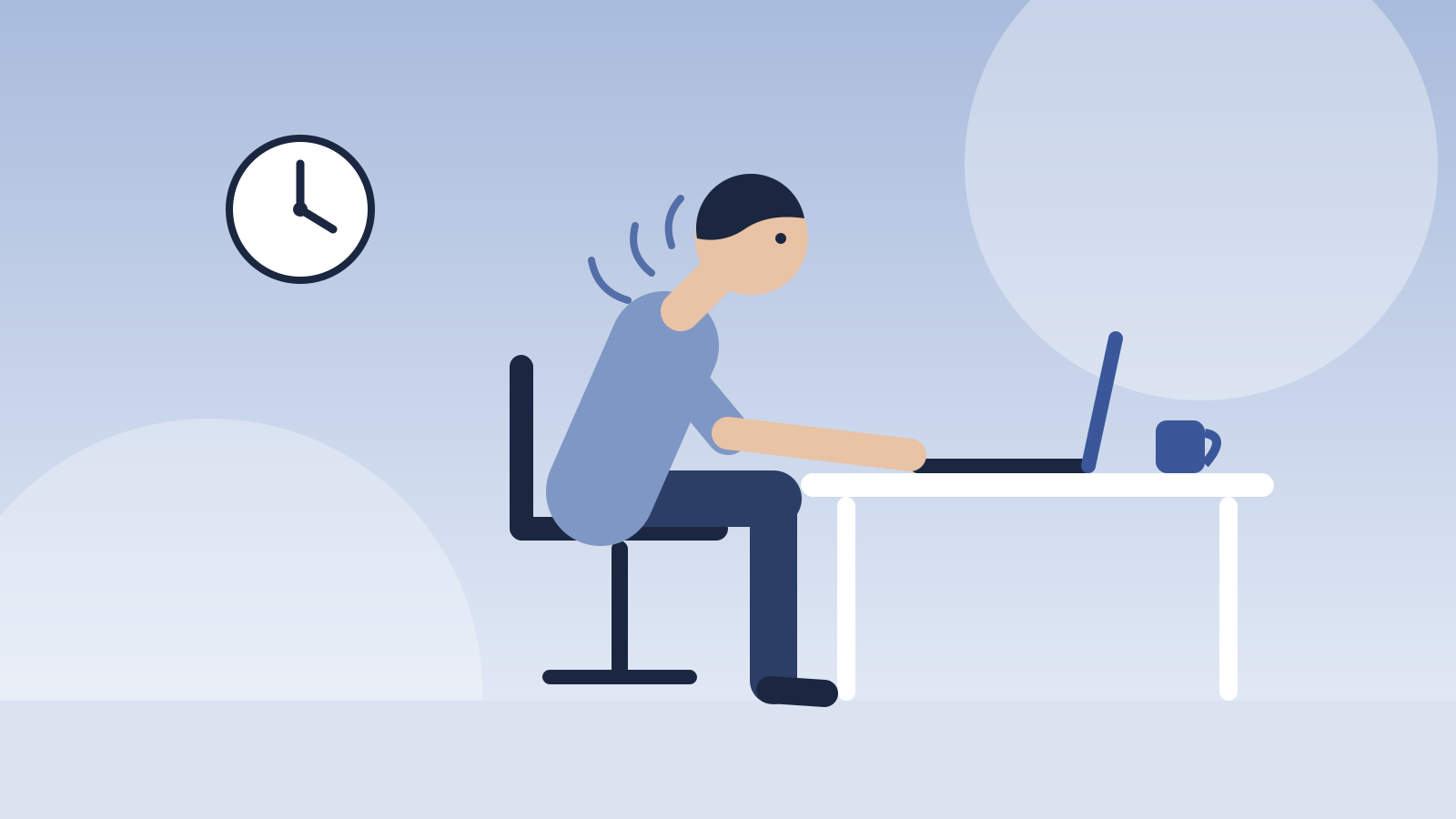
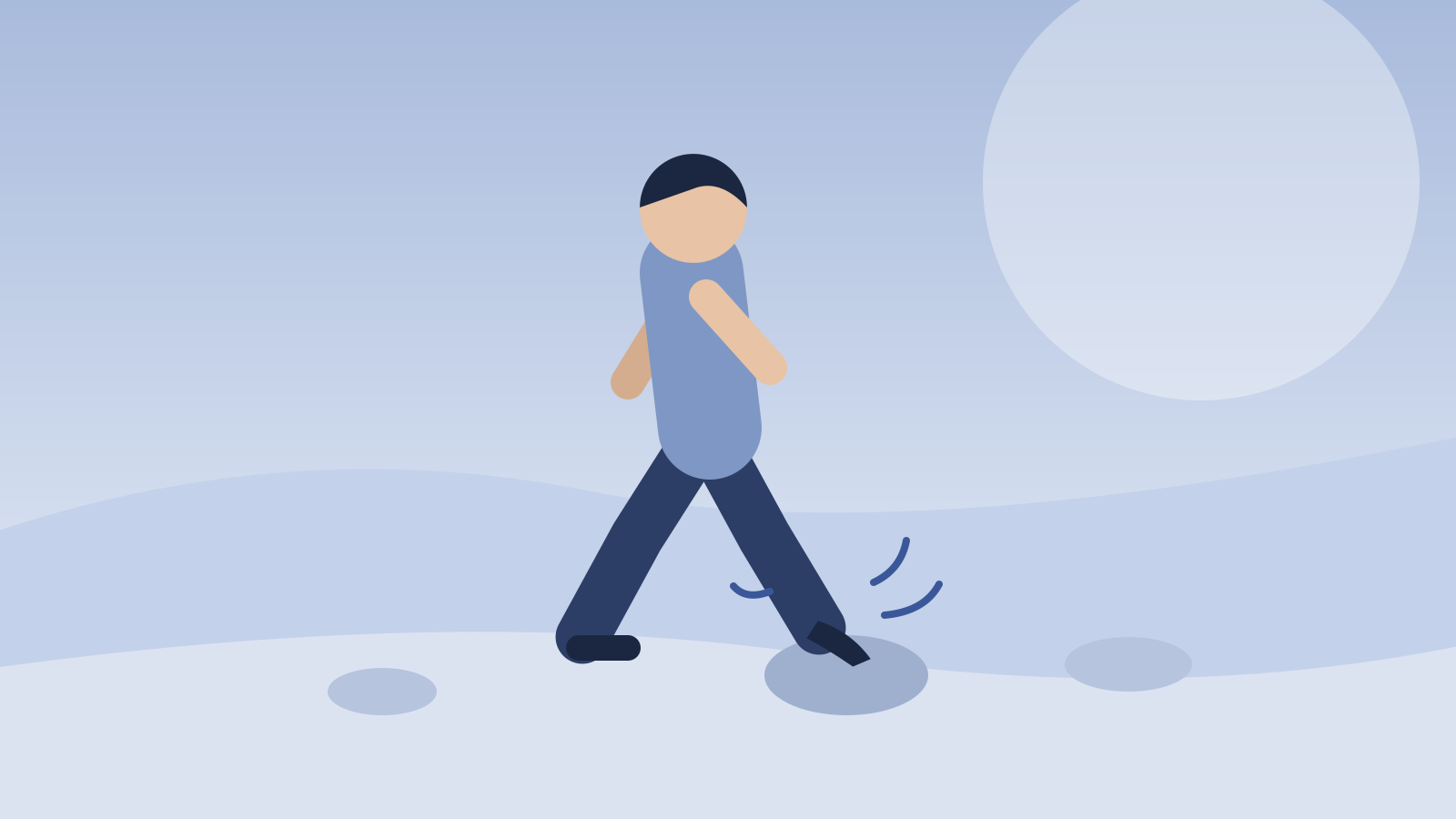
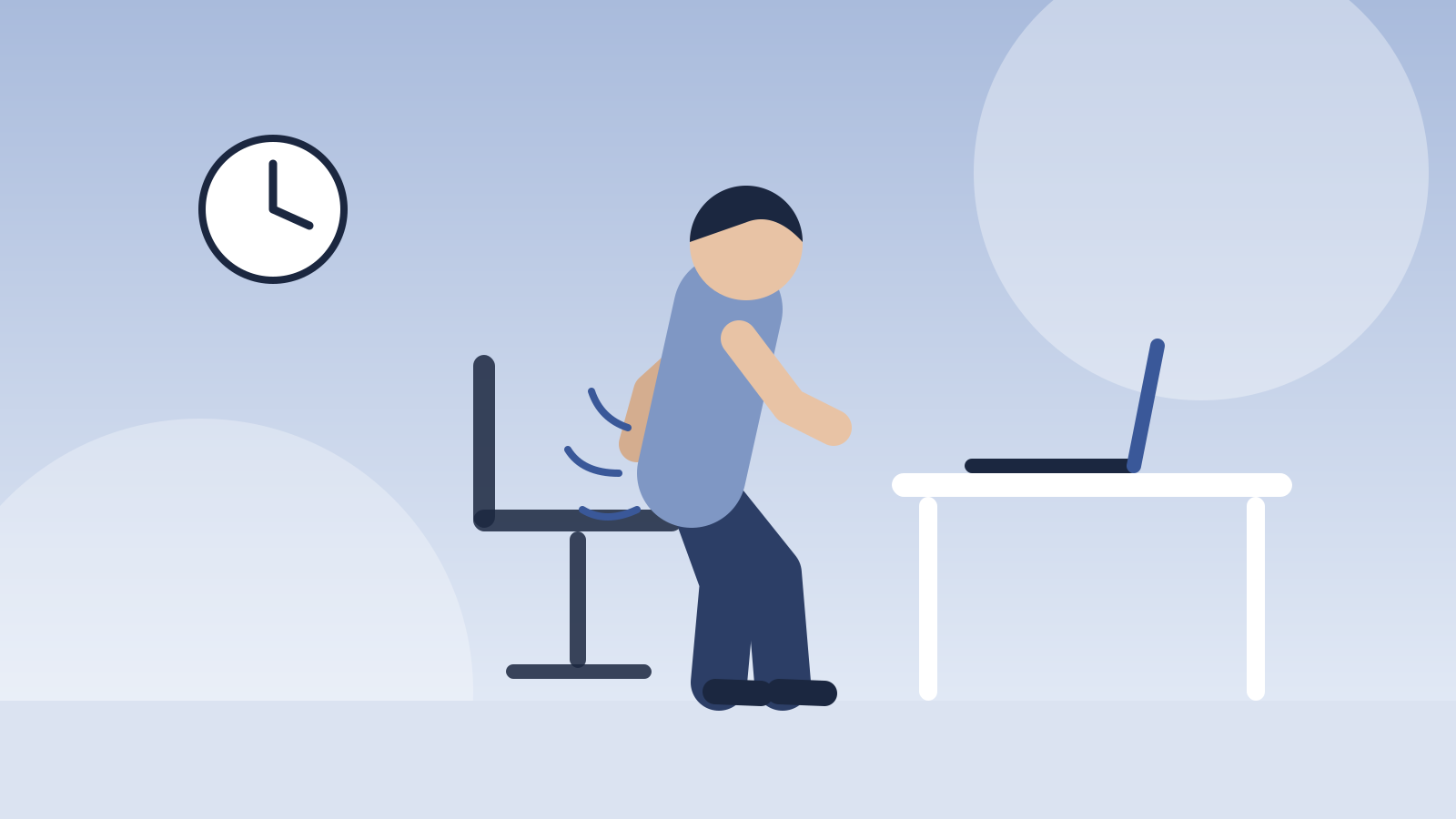
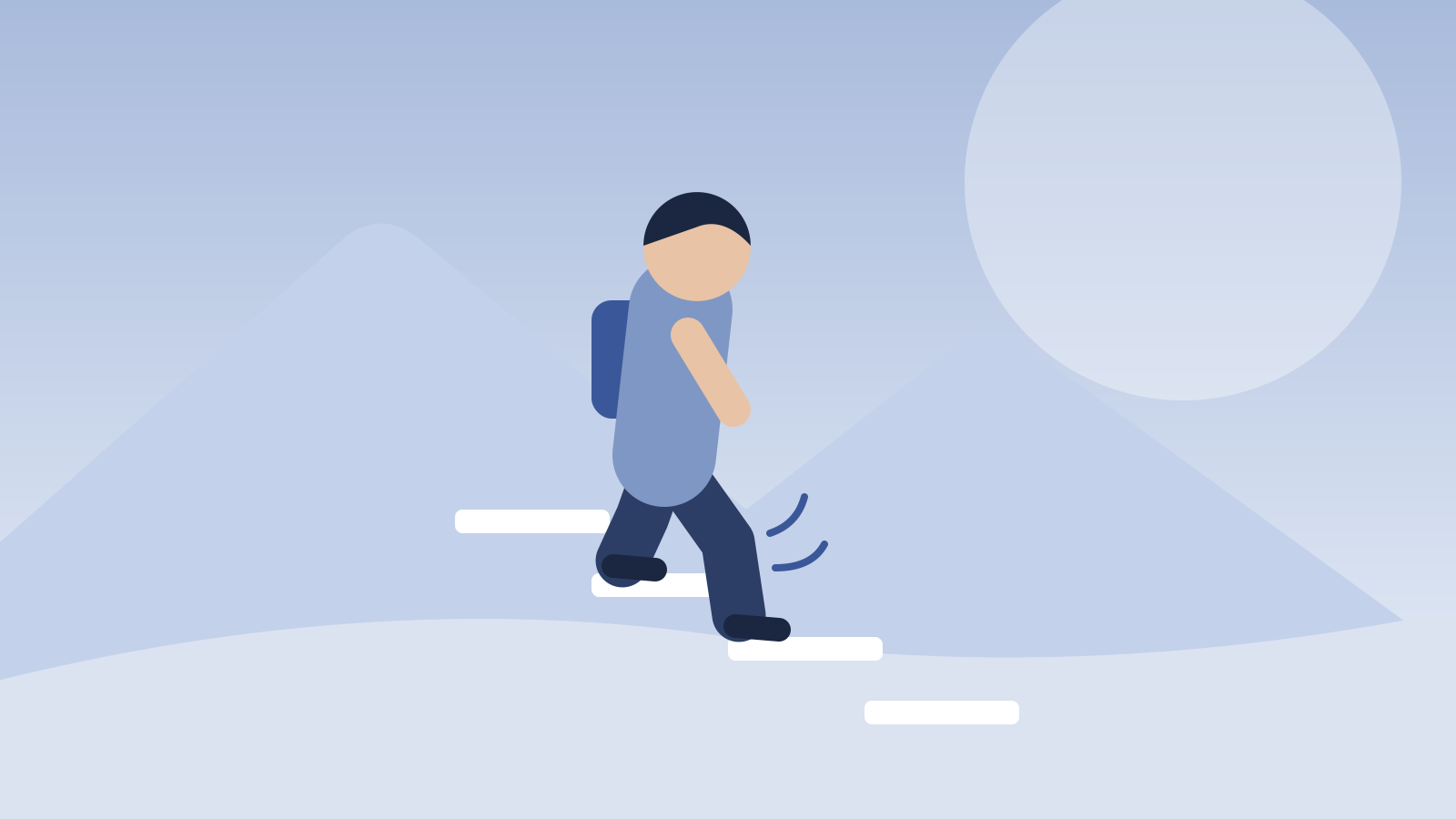
The pain usually comes on when the knee takes more load: squatting, going up or down stairs, walking downhill, jumping, running, or after sitting for a long time. It can come and go, and it may come back.
You don't always need to stop exercising. Adjust how much you do.
Guidelines recommend exercise as the main treatment, and cutting back for a while on whatever makes the pain clearly worse, such as downhill walking, stairs or long runs, then building up again gradually.
Three exercises you can do at home
Guidelines recommend training both the hip and knee muscles, not just the knee. The numbers below are a starting point; adjust them to suit you.
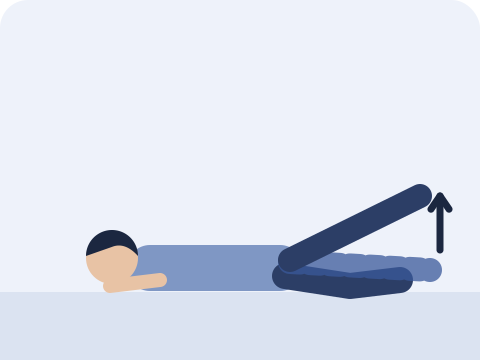
Side-lying leg raise
Lie on your side with the bottom leg slightly bent. Keep the top leg straight, lift it slowly, then lower it slowly.
10 times | 2–3 sets
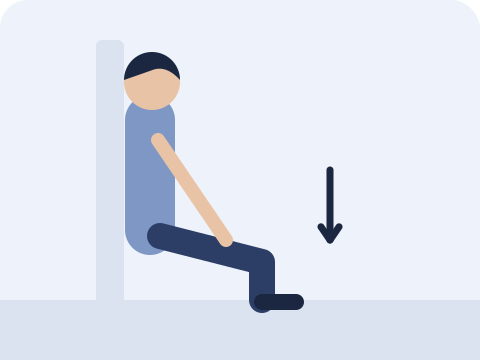
Shallow wall sit
Stand with your back against a wall and your feet about a step forward. Slowly lower to a comfortable depth, hold, then stand back up.
Hold 10 seconds | 5 times
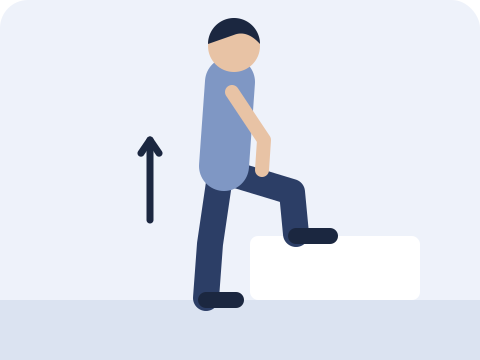
Step-up
Put one foot on a stair or a sturdy low step, stand up slowly, then step back down slowly. Keep your knee in line with your toes.
10 each side | 2–3 sets
While you do them
- Aim for no pain or only mild discomfort. If the pain clearly gets worse, or is worse the next day, make the movement smaller or do fewer.
- Move slowly and keep your knee in line with your toes.
- When you go back to running or hiking, start with shorter distances and build up gradually.
When should I get checked first?
- Your knee is clearly swollen, warm or red
- Your knee locks, or often gives way
- After a fall or twist, you can't walk normally or put weight on it
- The pain hasn't improved after several weeks
Common questions
Can I keep running or hiking with knee pain?
Often yes, but adjust how much you do, for example shorter distances and less downhill, so the pain doesn't clearly get worse. If you're not sure, please ask a physiotherapist.
Why train the hips for knee pain?
The hip muscles help control the position of the thigh and knee when you run or go down stairs. Guidelines recommend training both the hip and knee, not just the knee.
Do I need an X-ray or MRI?
Patellofemoral pain is mainly assessed from your history and a physical examination, so scans aren't always needed. If something else is suspected, a doctor will arrange what's needed.
References
- Willy RW, et al. Patellofemoral pain: clinical practice guidelines. J Orthop Sports Phys Ther 2019;49(9):CPG1–CPG95. PubMed
- Crossley KM, et al. 2016 Patellofemoral pain consensus statement from the 4th International Patellofemoral Pain Research Retreat, Manchester. Part 2: recommended physical interventions. Br J Sports Med 2016;50(14):844–852. PubMed

Anson Ko 高浩維
Registered Physiotherapist, seeing patients at Amazing Medical, Tsim Sha Tsui.About me
This article is for general reference only and does not replace professional diagnosis or treatment. If symptoms persist or warning signs appear, please see a doctor or physiotherapist.